How to Choose Art That Feels Personal, Not Generic
Updated: Apr 30

There is a particular kind of wall art that looks perfectly fine, but somehow says very little.
It may match the sofa.
It may sit politely above the sideboard.
It may even fill the space neatly.
But after a while, it begins to feel more like decor than discovery: something chosen because it “goes”, rather than because it matters.
Art does not have to be dramatic to feel personal.
It does not need to dominate a room, start a conversation at every dinner party, or announce itself from across the street wearing a feathered hat.
Often, the pieces we live with longest are quieter than that.
They hold a memory, a mood, a colour, a place, a creature, a season, or simply a feeling we want to return to.
So how do you choose art that feels personal, rather than generic?
The answer begins by looking beyond what matches, and asking what connects.
Start with feeling, not furniture
It is natural to think about colour and style when choosing art for a room.
Those things do matter.
A piece that jars with everything around it can feel uncomfortable, and a print that is too small may look a little lost.
But if the first question is only “does this match my curtains?”, the choice can become too narrow.
A better starting point might be:
How do I want this room to feel?
Calm? Uplifting? Restful? Airy? Grounded? Warm? Wild? Spacious? Reflective?
A bedroom might need softness and quiet.
A hallway might suit something welcoming.
A living room may have space for a stronger focal point.
A reading corner might want intimacy, while a dining space can often take a little more energy and colour.
Once you know the feeling you want, the art has a job to do.
Not a bossy job with a clipboard, but a subtle one.
It helps set the emotional temperature of the room.
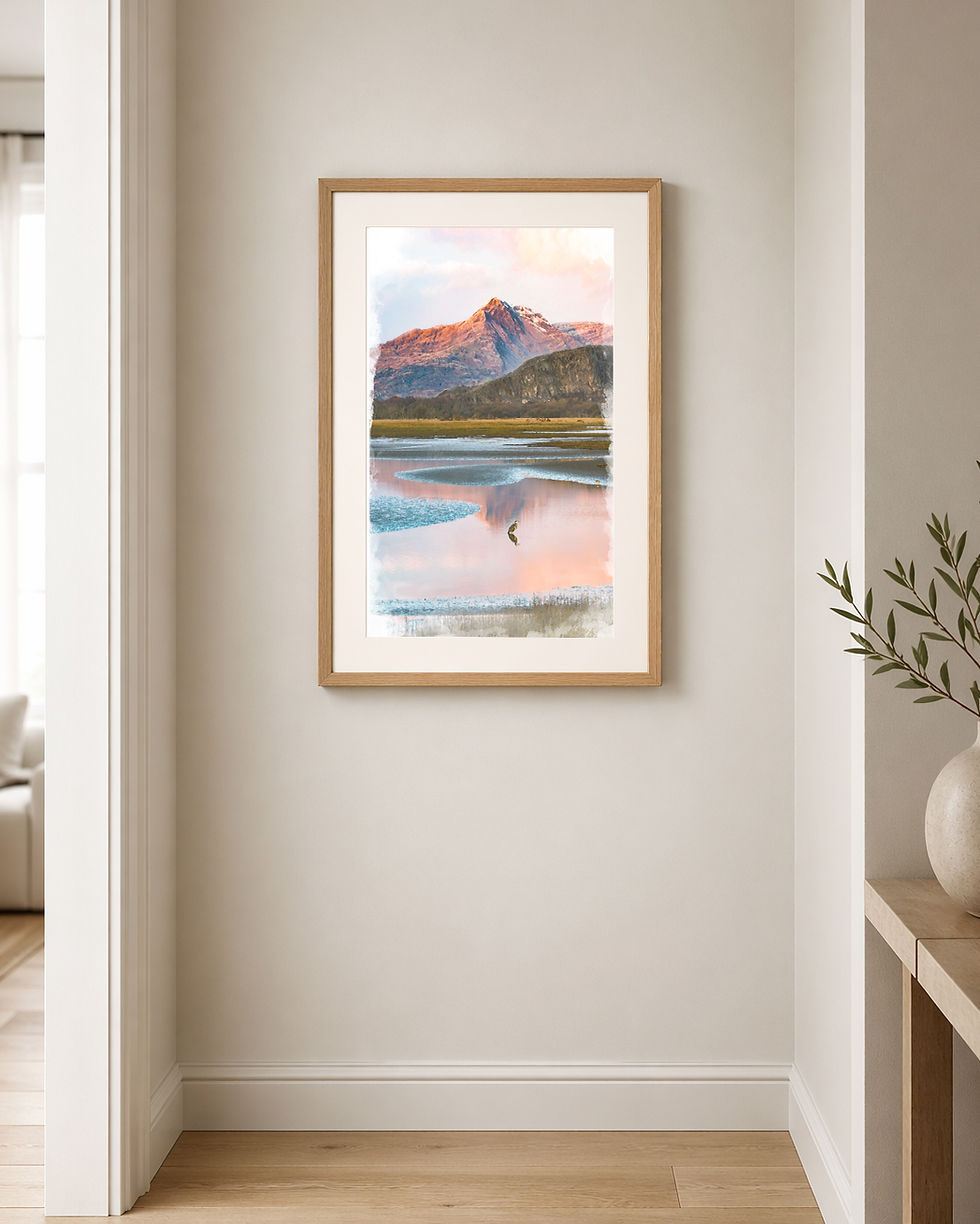
A misty landscape, a bird poised in stillness, a river view, or an abstract with gentle movement can all change how a space feels without shouting across it.
Choose subjects that mean something to you
One of the simplest ways to avoid generic art is to choose a subject that has personal meaning.
That does not mean every piece has to carry a dramatic life story. It can be much gentler than that.
Perhaps you are drawn to birds because they remind you of early mornings in the garden. Perhaps a river scene feels calming because you grew up near water.
Perhaps a woodland image brings back childhood walks.
Perhaps you love coastal colours because they make a room feel more spacious and breathable.
Personal meaning can come from:
a place you know
a season you love
a bird or animal you often notice
a colour palette that makes you feel settled
a landscape that reminds you to breathe
a sense of weather, light or atmosphere
a memory of home, travel, childhood or quiet escape
The subject does not have to be obvious to anyone else.
It only needs to speak to you.
That is the difference between art that fills a gap and art that becomes part of your home.

Let place become part of the story
Place has a quiet power in art.
A print of Shrewsbury Abbey, the River Severn, St Chad’s, the Dingle, a Welsh waterfall, or a familiar countryside view is not just an image of a location.
For someone who knows that place, it can hold belonging.
It may remind them of where they grew up, where they studied, where they walk, where they visited with family, or where they hope to return.
Local art can carry a strong emotional thread because it connects home, memory and landscape.
This is especially true when a place is shown with atmosphere rather than simply recorded. A familiar building in beautiful light, a river softened by reflection, or a street seen through an artist’s eye can make the everyday feel newly precious.
Art rooted in place also avoids the blandness of mass-produced decor.
It says: this is somewhere real.
This has a story.
This belongs to a particular landscape, not a warehouse catalogue.

Think about colour, but do not let it make all the decisions
Colour is important, but it should not be the only reason for choosing a piece.
A good approach is to look for connection rather than exact matching.
The artwork might pick up a colour already in the room, such as a soft blue in a cushion, a warm neutral in a rug, or a green from houseplants.
It might also introduce a gentle contrast that gives the room more life.
A completely matched scheme can become flat.
A room where every colour is too carefully coordinated may feel more staged than lived in. Art can bring a little weather into that arrangement: a deeper blue, a flicker of gold, a touch of wild green, a smoky grey, a wash of soft light.
If your room is neutral, art can stop it feeling bland.
If your room already has colour, art can help gather those colours together.
Look for:
one or two colours that echo the room
a mood that suits the space
enough contrast to be interesting
a palette you will still enjoy when trends change
A piece does not need to match everything. It needs to belong.

Consider scale before you fall in love completely
This is the practical bit, but it matters.
A piece of art can be beautiful and still look wrong if the scale is not right for the space.
Very small prints can disappear above large furniture.
Large pieces can feel cramped if they are squeezed into a narrow wall. A gallery wall can look lovely, but only if the spacing feels intentional.
Before buying, measure the wall or the furniture beneath it.
As a general guide, artwork above a sofa, bed, console table or sideboard often looks best when it is around two-thirds to three-quarters of the width of the furniture below.
It does not have to be exact, but this gives a pleasing sense of proportion.
For smaller spaces, a single A4 or A3 print can work beautifully, especially in a mount and frame.
For larger walls, you might consider:
one larger statement piece
a pair of related prints
a set of three
a small gallery wall
a canvas print for a more contemporary feel
Scale affects how personal the art feels too.
A tiny piece tucked into a thoughtful corner can feel intimate.
A large canvas can feel immersive.
The right size helps the artwork settle into the room rather than hover awkwardly like it arrived at the wrong party.

Choose the format that suits your home and budget
Personal art does not have to mean original art, and it certainly does not have to mean the most expensive option.
Different formats suit different needs.
Fine art prints
Fine art prints are a lovely way to bring an artist’s work into your home at a more accessible price. They are especially versatile because you can choose a frame and mount that suits your own decor.
They work well for bedrooms, hallways, smaller living spaces, shelves, gallery walls and thoughtful gifts.
Canvas prints
Canvas prints can suit a more contemporary or relaxed space. They don't need glazing, and they can work well where you want a softer, less formal finish. They are also useful for photography, landscapes and pieces with atmosphere or texture.
Original artwork
Originals have a different presence.
The surface, marks, texture and scale are part of the experience.
An original can become the anchor of a room and may be especially suited to living rooms, dining rooms, entrances or spaces where you want something with depth and individuality.
There is no single best choice.
The best format is the one that suits the room, the budget and the way you want to live with the piece.
Framed print of original bright coloured artwork
Prints, canvases and originals each bring a different kind of presence to a room.
Buy from artists whose work you want to live with
One of the pleasures of buying from an independent artist is that the work has a traceable hand and eye behind it.
You are not choosing something anonymous.
You are choosing a way of seeing.
An artist may return again and again to certain subjects: birds, water, trees, weather, old buildings, changing light, abstract marks, quiet landscapes.
When you connect with that way of seeing, the artwork often feels more personal because it carries a sense of attention.
Buying from an artist also lets you build a collection gradually.
You might begin with a print, then add another from the same series later.
You might choose work connected by colour, place, mood or subject.
Over time, your home begins to gather its own visual language.
That is far more meaningful than filling every wall quickly.
Let your collection grow at the pace of real affection
Choosing from an independent artist lets you build a home around real attention, not anonymous decoration.
Look for the piece you return to
Sometimes the best clue is very simple: notice which artwork you keep coming back to.
The one you reopen.
The one you imagine in more than one room.
The one you compare everything else against.
The one that makes the wall in your mind feel less empty.
That small tug of recognition matters.
Of course, practical questions still count.
Size, budget, framing, delivery and colour all deserve attention.
But once those are considered, give some weight to instinct.
Homes are not showrooms.
They are places where our days unfold, where we rest, gather, work, think, recover and begin again.
The art we choose should support that.
It should give us somewhere for the eye to land and the mind to wander.
Final thoughts on Personal not Generic
Choosing personal over generic art is not about ignoring your decor.
It is about going deeper than decor.
A piece can suit your room and still mean something.
It can pick up the colours of your home while also reminding you of a river walk, a bird in the garden, a favourite town, a quiet season, or a feeling you want to keep close.
The best art for your home is not always the loudest or the most fashionable.
Often, it is the piece that feels quietly right.
The one that brings a little more atmosphere into the room.
The one that holds a story.
The one that keeps calling you back.
Browse my Collections
I have a range of high quality prints of my original artwork, collected by theme, available to buy in my shop.

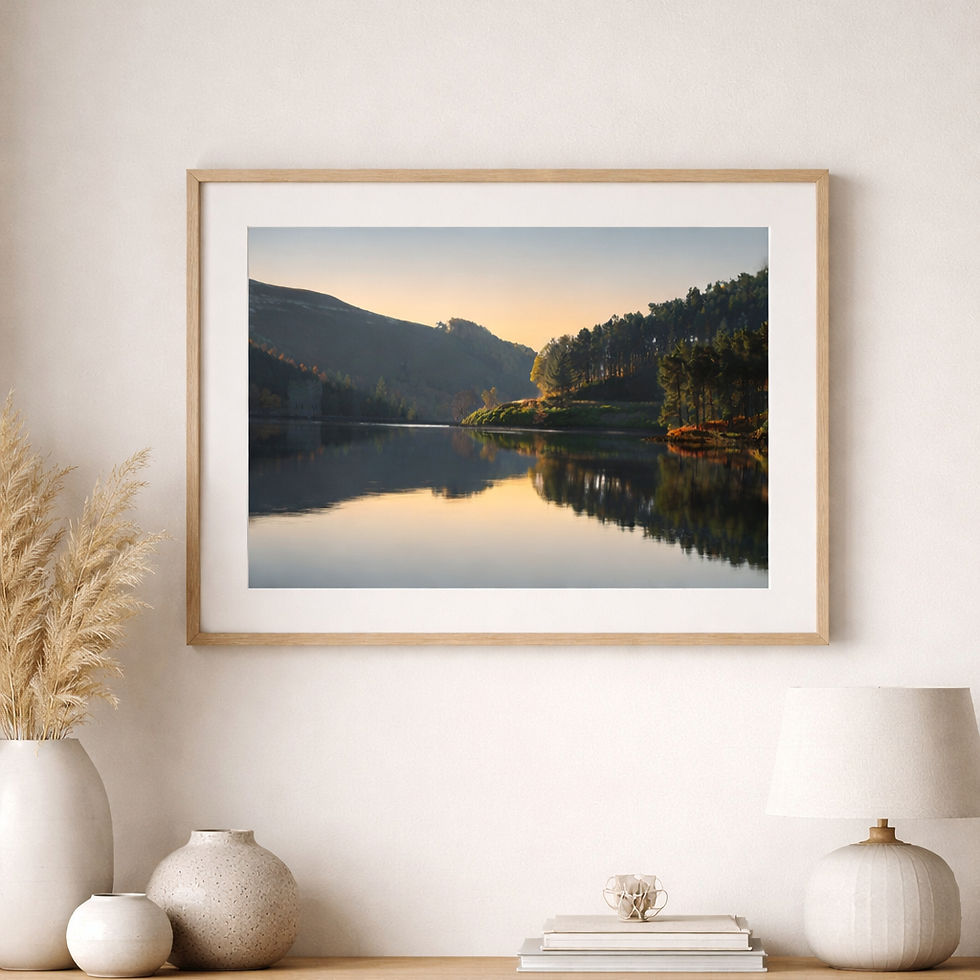

“The one that keeps calling you back” is such a lovely way to describe choosing pieces that truly belong in a home rather than simply filling a wall.
I love this, but I have to admit I’m usually the person who just goes with “I like it” and then checks the price tag to make sure it fits my budget. I’ve never really thought about all the layers behind choosing art. I just know when something feels right. Now I’m wondering if my instinct might actually be onto something after all.
Once again, great tips on adding art to our homes. Art is so very personal. Surrounding ourselves with the right art elevates our mood!