How to Choose Wall Art for a Hallway

Hallways are often the most overlooked part of the home.
They are treated as spaces to pass through rather than places to enjoy.
Yet a hallway is often the first part of the home we see when we step inside, and the last glimpse we have as we leave.
It sets a tone, whether we realise it or not.
A bare hallway can feel purely functional.
A cluttered one can feel cramped or restless.
But a thoughtfully chosen piece of wall art can do something very different.
It can soften the space, create a sense of welcome, and turn even a narrow passage into somewhere that feels calm, personal, and complete.
The key is choosing with the space in mind.
Hallways usually have their own particular challenges:
limited width
awkward light
narrower walls
frequent movement past the artwork
and often several doors interrupting the available space
That means the art that works beautifully in a living room may not necessarily be right for a hallway.
The good news is that hallway art does not need to be complicated.
With the right size, subject, and placement, it can become one of the most effective parts of the house.
Start With the Shape and Scale of the Hallway
Before choosing artwork, it helps to think about the hallway itself.
Is it:
long and narrow?
short but quite dark?
open and airy?
interrupted by several doors?
a staircase hall with changing viewpoints?
The shape of the space matters because it affects how the eye moves.
A narrow hallway usually benefits from art that does not project too heavily into the room or feel too visually dense.
A longer hallway may suit a sequence of pieces rather than one single print.
A hallway with a clear end wall may benefit from one stronger focal piece that draws the eye forward.
This is one of the most useful questions to ask at the beginning:
👉 Do I want the artwork to create a focal point, or to create a rhythm through the space?
If you want a focal point, one carefully placed print may be enough.
If you want rhythm, a pair or a small sequence of prints can work beautifully.
Choose the Right Size
One of the most common mistakes with hallway art is getting the size wrong.
Very large pieces can feel overwhelming in a narrow passage, especially if the walls are close and the artwork is viewed at short range.
On the other hand, very tiny pieces can feel hesitant and lost, particularly on a longer run of wall.
In most hallways, the most useful sizes are:
A4
A3
or a restrained grouping of similar-sized prints
These sizes are practical because they:
sit comfortably on narrower walls
are easy to frame
work well singly or in pairs
and do not dominate the space
If the hallway wall is quite long, several coordinated A4 or A3 prints can work especially well.
If the space is tighter, one A3 print or a pair of A4s may be all you need.
The important thing is that the art feels intentional rather than squeezed in or over-scaled.
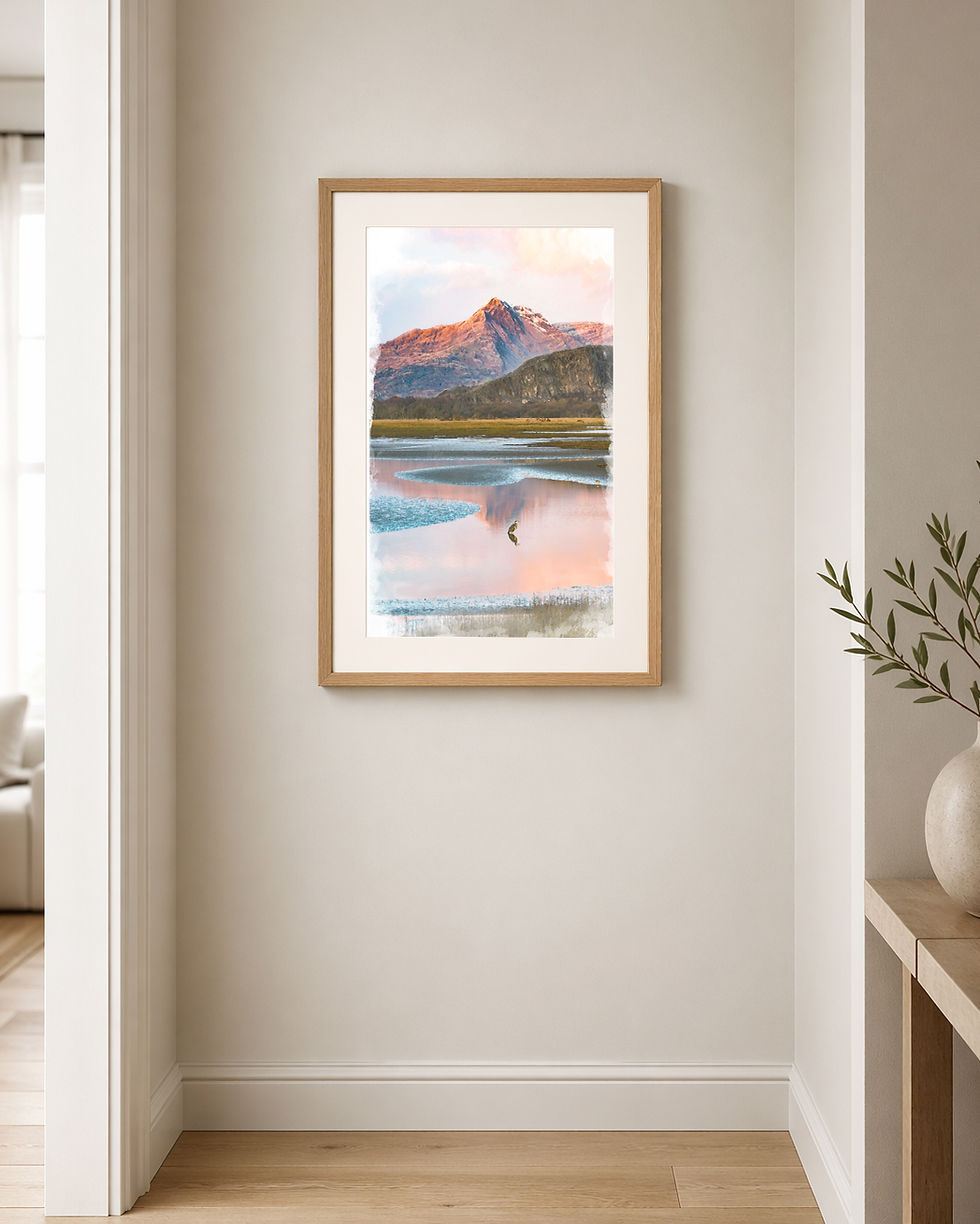
Think About How People Move Through the Space
A hallway is not usually a room where people stop and sit for long periods. It is a moving space.
That changes the way artwork is experienced.
In a hallway, art is often seen:
in passing
from slightly different angles
sometimes in lower light
and often in shorter glances rather than long viewing
Because of this, hallway art works best when it has:
clarity
a calm visual structure
a strong overall mood
and enough presence to register quickly
That does not mean it should be simplistic.
It simply means that very busy compositions or highly cluttered arrangements can make a narrow space feel even more visually crowded.
A hallway often benefits from art that reads clearly at a glance and then offers more on closer inspection.
Choose Subjects That Suit the Mood You Want
The subject matters more than people sometimes realise.
Because the hallway often forms the first emotional impression of a home, the artwork there can quietly influence how the whole space feels.
For a calm and welcoming hallway
Choose:
landscapes
water scenes
woodland paths
quiet wildlife
local landmarks with a soft atmosphere
These subjects tend to feel gentle and grounded, and they work especially well if you want the hallway to feel more like an extension of the home rather than a passage to be hurried through.
For a more personal hallway
Choose:
local scenes
meaningful places
artwork connected to memory or location
a sequence of prints that tell a subtle story
This works particularly well in hallways because it gives the space identity.

For a narrower or darker hallway
Choose artwork with:
openness
light
some visual depth
a restrained palette
Landscapes, estuaries, skies, and water scenes are especially good for this because they can create a sense of space where the architecture itself feels tighter.
Colour Can Make a Hallway Feel Wider or More Restful
Colour is especially important in hallways because these spaces are often more enclosed and may have less natural light than main living areas.
A well-chosen artwork can help counteract that
.
Colours that work particularly well in hallways
pale blues
muted greens
warm neutrals
stone and sand tones
soft greys
earthy browns and moss tones
These colours tend to:
reflect light softly
feel restful rather than agitating
connect naturally with wood, painted walls, and neutral flooring
create continuity with calm interiors elsewhere in the house
A hallway does not usually benefit from art that feels too harsh, high-contrast, or visually loud unless the house as a whole is styled in a much bolder way.
If your aim is calm, the artwork should support that at first glance.
One Piece, a Pair, or a Gallery Wall?
All three can work, but the best choice depends on the hall.
One single piece
This is ideal if:
the wall space is limited
you want a clear focal point
the hallway is narrow
or the architecture already provides enough visual structure
A single carefully chosen print can be very elegant in a hallway.
A pair of prints
This works beautifully when:
you have a slightly longer run of wall
you want balance and rhythm
the prints share a common palette or subject
Pairs often feel calmer than larger gallery walls and are easier to place.
A small gallery wall
This can work very well in a hallway, especially in:
longer passages
stairways
or spaces where you want a collected feel
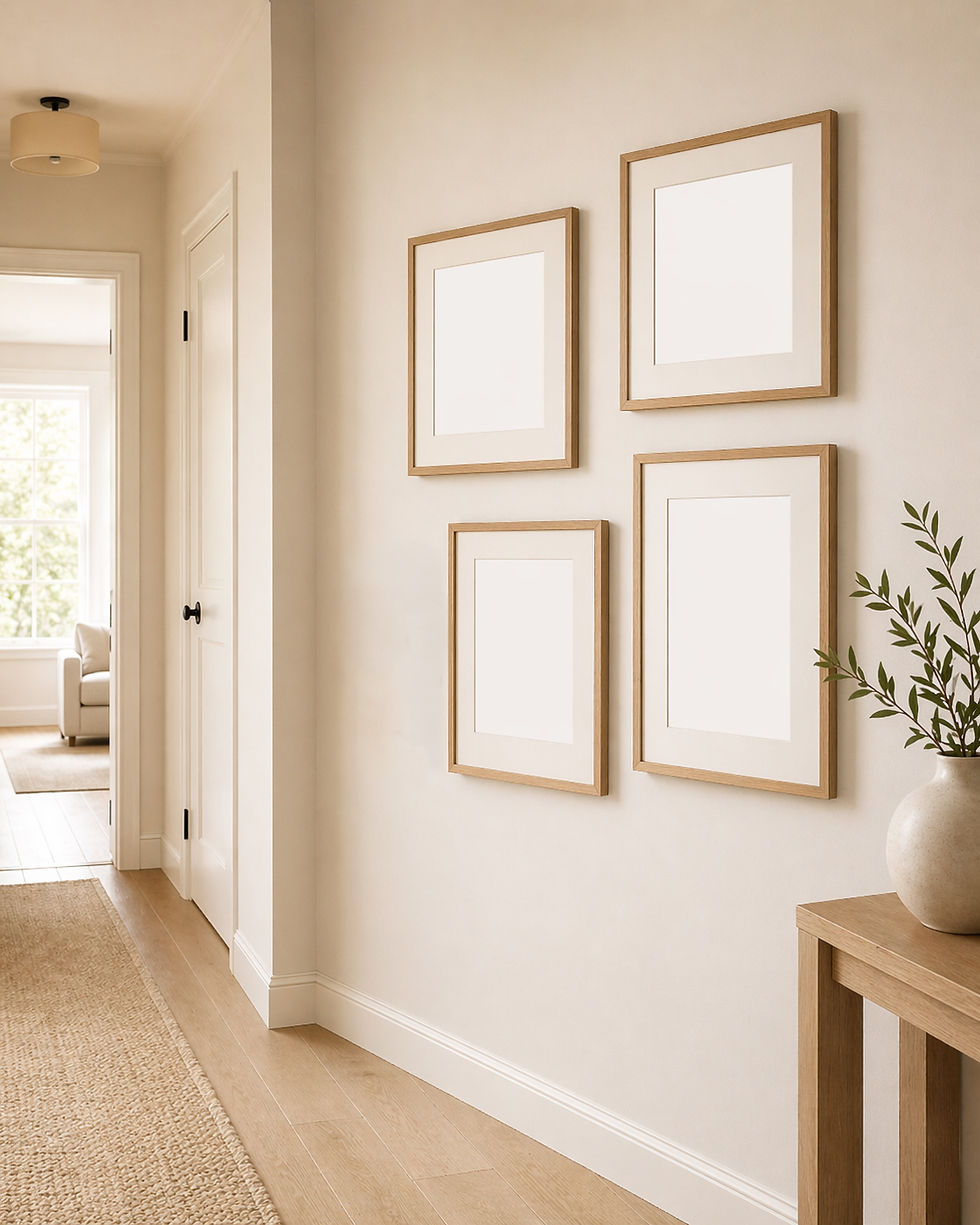
The key is restraint.
Keep:
the palette cohesive
the frames coordinated
the spacing consistent
and the number of pieces controlled
A hallway gallery wall should feel curated, not crowded.
Portrait or Landscape Format?
The shape of the artwork can help the hallway itself.
Portrait format
Portrait prints work well in hallways because they:
suit narrower walls
draw the eye upward
often feel elegant in vertical spaces
They are especially useful between doors, in stair halls, or where the wall itself is tall and narrow.
Landscape format
Landscape prints are useful when:
the hallway has a longer uninterrupted wall
you want to create visual width
the art includes distance or horizon
A landscape image with space, sky, or water can help make the hallway feel less enclosed.
A mixed arrangement
A combination of portrait and landscape pieces can work too, but it needs to be controlled and balanced. In hallways, simpler is often better.
Framing Matters in a Hallway
Because hallways are usually transitional spaces, the framing needs to work a little harder.
Good hallway frames are usually:
simple
well-finished
not too bulky
and consistent with the rest of the house
Light oak, white, black, or pale natural wood are all good options depending on your style.
Mounts can also help enormously.
A pale ivory or off-white mount:
gives the artwork breathing room
adds softness
and helps a smaller print feel more substantial
This is particularly useful in hallways, where clean presentation can make the whole space feel more considered.
Think About Lighting
Hallways are often tricky because they do not always have generous natural light.
That means some artworks will perform better than others.
If the hallway is dark, look for art with:
some light in the image
softer tonal transitions
enough contrast to be readable, but not harsh
a palette that does not disappear into shadow
This is also where good artificial lighting can help. If possible, place artwork where it benefits from:
a nearby lamp
a wall light
or general ceiling light that does not create too much glare on glass
A beautiful print hidden in gloom cannot do its job properly.
Use Hallway Art to Connect the House
A hallway can act as a visual bridge between rooms.
That makes it a very useful place to reinforce the tone of the home.
For example:
if your bedroom and living room are both calm and nature-led, hallway art can echo that mood
if your home uses lots of soft neutrals and natural textures, the hallway is a good place for landscapes, woodland scenes, or wildlife pieces in similar tones
if your home has local or meaningful place-based themes, the hallway is ideal for introducing those
In this way, hallway art becomes more than decoration. It becomes part of the flow of the house.
What to Avoid
There are a few things that often make hallway art less successful.
1. Art that is too small
This can make the space feel under-finished rather than elegant.
2. Too many competing pieces
A hallway usually needs calm, not visual traffic.
3. Very dark or muddy work in a dark passage
This can make the space feel heavier.
4. Art that projects too much into a narrow hall
Chunky framing can be awkward in tight spaces.
5. Random subject matter
Hallway art works best when it feels connected in mood, colour, or story.
A Few Hallway Art Ideas That Work Well
If you want practical combinations, these are all strong options:
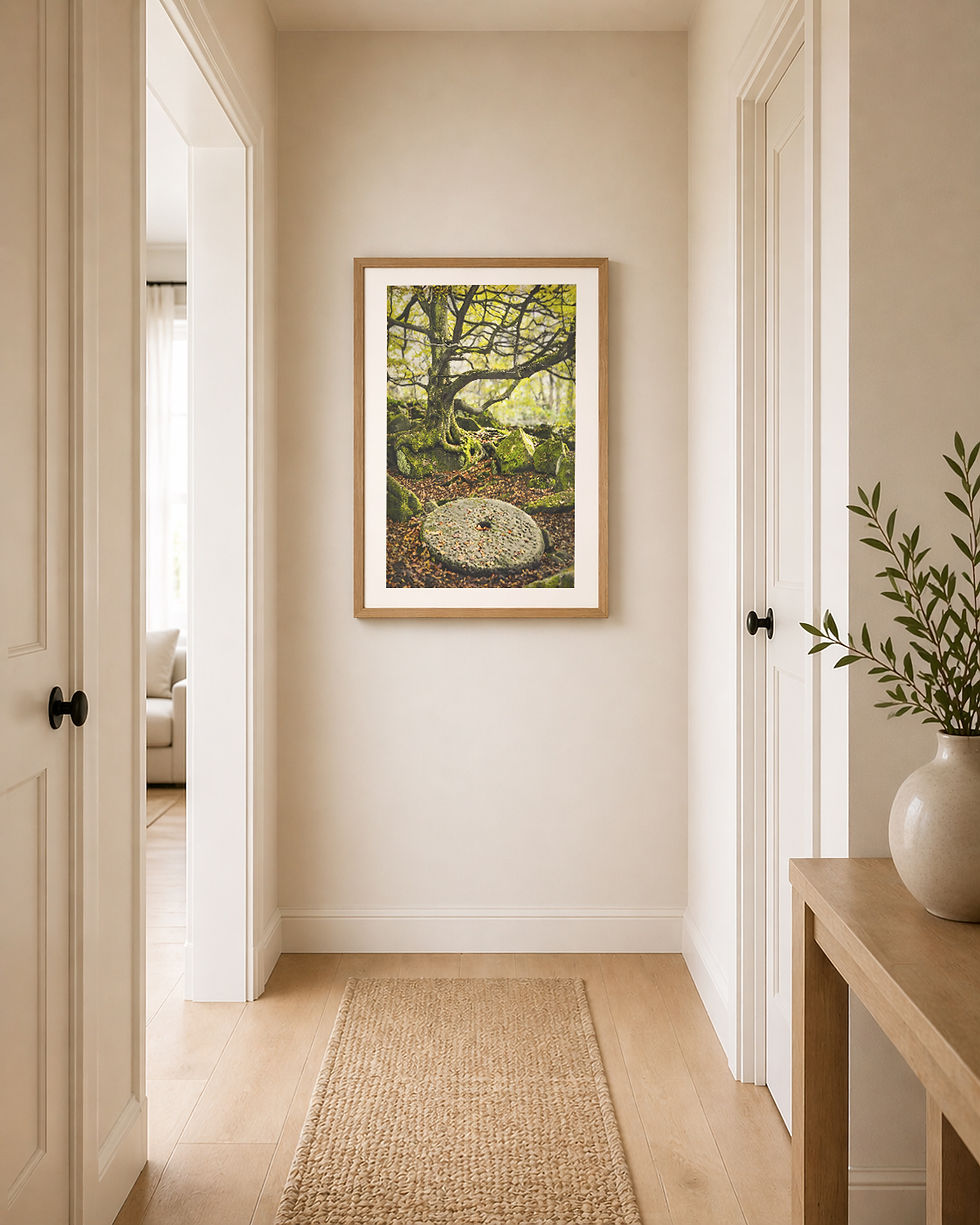
A single portrait-format landscape
Ideal for a narrow wall between doors.
A pair of A4 or A3 prints
Great for a longer stretch of wall and easier to style than a full gallery wall.
A small series of local landmarks
Perfect for adding identity and a sense of place.
A sequence of wildlife prints
Works well if kept soft in colour and consistent in framing.
A landscape at the end of the hall
This is particularly effective because it draws the eye forward and creates a sense of destination.
How to Choose the Right Piece
If you are still unsure, this is a useful simple test:
Ask yourself:
Does this piece make the hallway feel calmer or busier?
Does it help the space feel brighter, softer, or more welcoming?
Can it be seen and appreciated in passing?
Does it fit the wall comfortably?
Does it feel connected to the rest of the home?
If the answer is yes to most of those, you are probably choosing well.
Final Thoughts
A hallway may not be where you spend the most time, but it can still shape the emotional tone of your home.
The right wall art can make it feel:
more welcoming
more personal
less overlooked
and much more beautifully resolved
Landscapes can add space.
Wildlife can add warmth.
Local scenes can add meaning.
A pair of prints can create rhythm.
One strong piece can create calm.
In the end, hallway art is not about filling an empty wall.
It is about turning a transition space into part of the experience of home.
Explore My Prints
If you’re looking for nature-inspired artwork that works beautifully in hallways, reading corners, and calm interiors, you can browse my collection here:


You always ofter such great advice on wall art. I especially love the Welch Bridge photo.
I've very much been enjoying your guides this month. Thank you for your insights!
Lovely ideas for making hallways feel more intentional and welcoming